
Thinking
Asking your procurement data a question
The ten-clicks ritual is not procurement working as designed. It is an interface nobody has replaced yet, and the reason it survives is that nobody calls it a problem.

The ten-clicks ritual is not procurement working as designed. It is an interface nobody has replaced yet, and the reason it survives is that nobody calls it a problem.
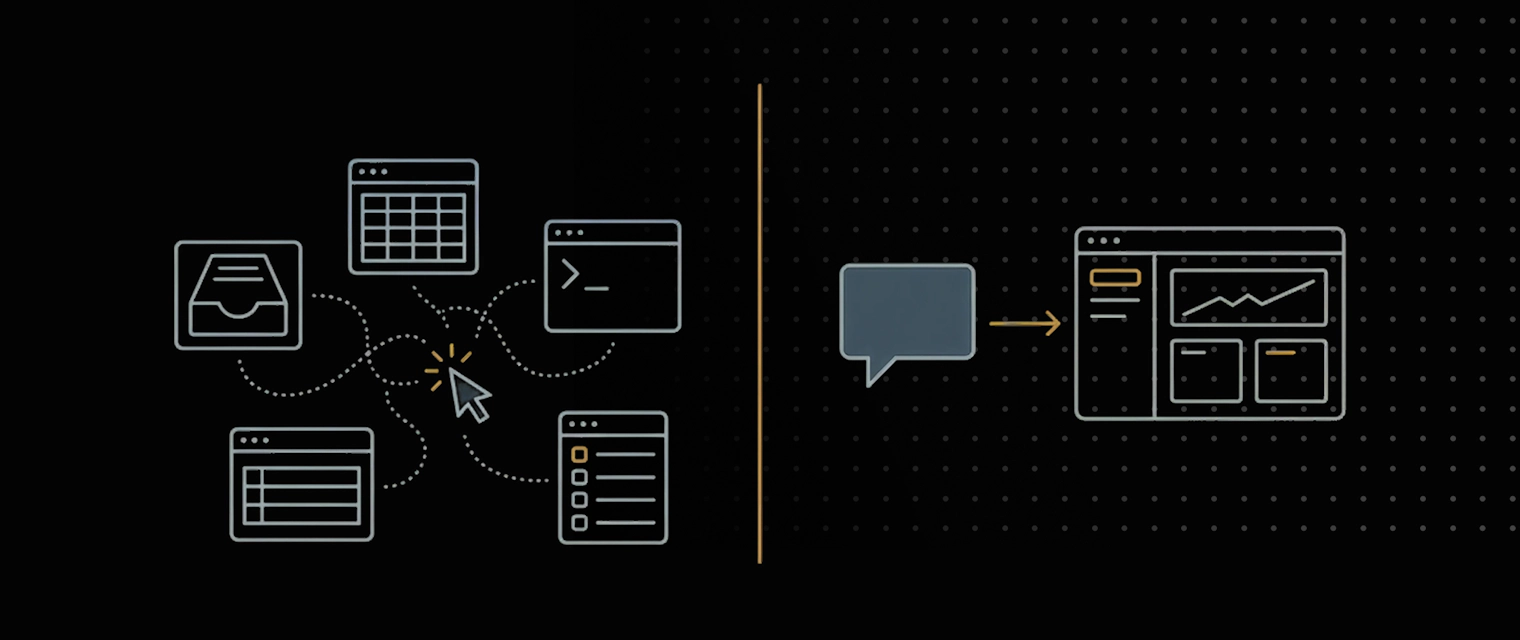
Procurement teams start their day with the same ritual: going through their inbox, SAP, and trackers to ping suppliers. It takes 10 clicks just to see if a PO or shipment is on time.
Nobody calls this a problem. It is just how procurement works, and that is why it persists.
Google Search was the same. You would type a query, get 10 links, and click through each trying to find your answer. Nobody questioned it either, until Google changed it. Now you describe what you need in plain language and it answers directly. Follow-ups and deep-dives, all without leaving the page. The old way suddenly feels broken.
Now picture that for procurement.
Instead of switching between your inbox, ERP, and three different spreadsheets, you simply ask your system:
Today, most teams piece this together manually. From what I see across manufacturers, buyers and planners lose 60-70% of their day to it: chasing confirmations, updating systems, and cross-referencing data.
That is time that should be going toward strategic sourcing, negotiations, and supplier relationships.
Google's move signals a shift: the next user interface is conversational. And procurement is already heading there.
If you could ask your procurement data just one question right now and get an instant answer, what would it be?
First published on LinkedIn on 19 June 2026.
Thirty minutes, your order flow, our agents. You tell us where the exceptions pile up and we show you what handling them looks like.