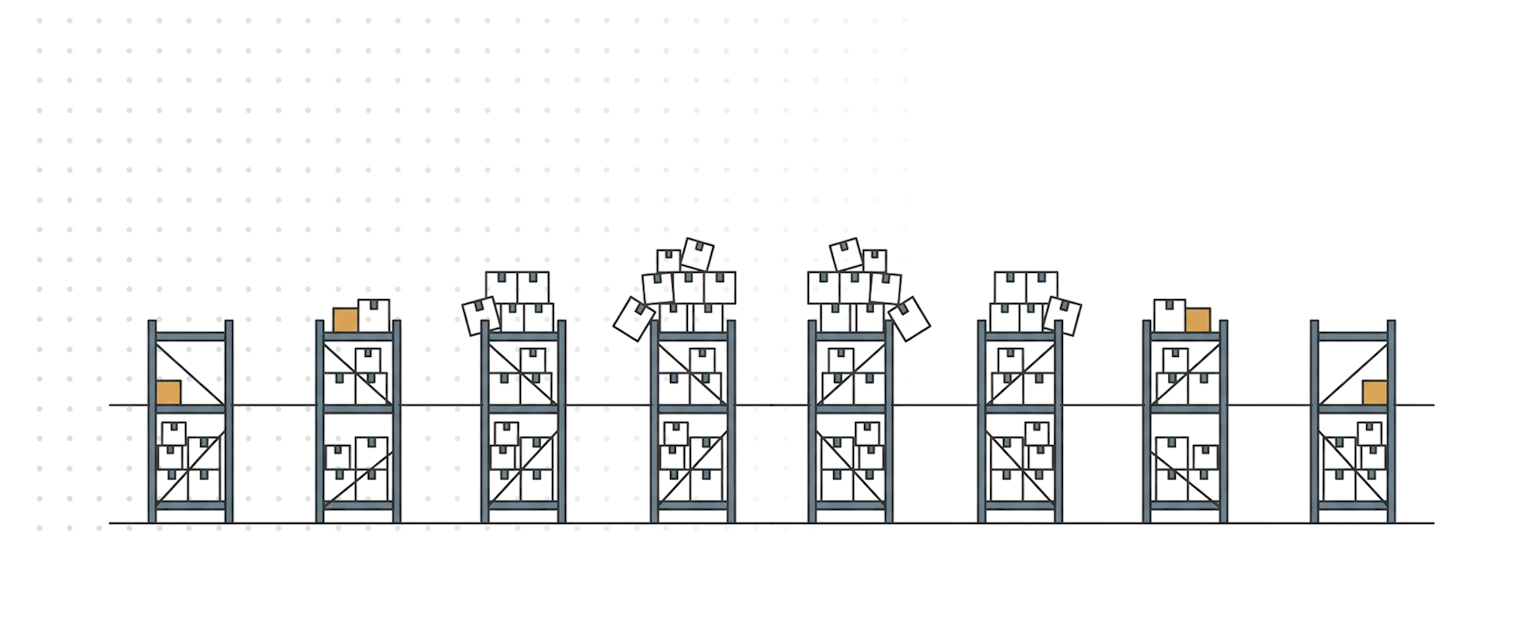
Your safety stock keeps growing because your planners cannot see what is actually inbound. Most supply chain leaders I talk to read that buffer as a planning-parameter problem, or a discipline problem, and send a team to review the numbers once a year. The buffer is a communication failure that has already been priced in, and the working capital is sitting inside it.
The hardest thing to fix in your supply chain is your planner's anxiety. A late supplier gets resolved and a missed shipment gets expedited, but the anxiety about the next one has nowhere to go except into your lead times.
Where the anxiety lands
A supplier confirms they'll be ready in 25 days. Shipping takes another 15. That's a 40-day lead time, and most of the time, it works. But supply chains are unpredictable. It might stretch to 50 days, occasionally 60.
So what gets entered into SAP is 80 days.
Nobody wants to be the person who reports a production disruption to their manager. Nobody wants their numbers showing red on the Power BI dashboard. So every function inflates the lead time with buffers in a single ERP field.
Why the annual review goes stale
When every function independently builds in its own buffer, the material arrives at the warehouse weeks before it's needed. But holding inventory isn't free. At a typical carrying cost of 20% of its value per year, excess stock ties up working capital and costs manufacturers millions.
Good leaders sit with their teams once or twice a year, review the lead times. But after some time, the data starts going stale again. The review does nothing about the reason the number was inflated in the first place. Planners add a buffer when they lack visibility and control, and an annual review gives them neither.
The fix is to identify these issues proactively, inside all the system limitations you already have. That is a different job from buying a new system or running a periodic data cleanup.
In the Agentic AI era, agents can work autonomously, collaborate with your suppliers and take action on your behalf, so that your Power BI dashboard never turns red. Resilient inbound supply chains increase leaders' confidence, allowing them to reduce excess stock and release working capital.
Lead times set once a year stay fixed. Handling disruptions proactively, before they show up on your dashboard, is what makes them flexible.
Excess inventory, or insurance
The stock that an inflated lead time produces sits in the warehouse, where it stops looking like anxiety and starts looking like an argument between two departments. Your finance team sees excess inventory and your planners see insurance.
Safety stock keeps production running when unexpected supply delays hit. At a $200M manufacturer, that can mean up to $5M in locked-in working capital and up to $1.25M in annual carrying costs.
Some delays are genuinely unavoidable, driven by external forces like wars and geopolitical disruptions. You navigate around these and move on.
Supplier delays are a different category. You often can't prevent them, but with an early warning, planners can find an alternate source or adjust the production schedule before the delay reaches your production floor.
The problem is that the warning rarely arrives in time. Suppliers don't communicate delays, or when they do, it's too late to react. Some updates get stuck in the inbox because planners have so many critical activities competing for attention, and updating the ERP is usually the last priority. So planners end up making decisions from data that no longer reflects what's actually inbound.
That lack of real-time inbound visibility leaves the planner managing against uncertainty they can't resolve. To protect the next lot, they order earlier so a delay still lands in time, or inflate the quantity beyond what they need as insurance. Over time, those reactions accumulate into costly excess inventory.
You can eliminate this communication blind spot with AI agents.
Here is how a mid-sized packaging manufacturer uses AI to improve supplier communication. The AI extracts supplier acknowledgements and delivery date changes from emails and PDFs, and then alerts planners in real time. This reduced PO confirmation time by 90%. With accurate confirmed dates, planners can source alternative materials or adjust factory schedules before the delay reaches the floor.
A test for your own buffer
As planners gain confidence in inbound visibility, the buffer they've been building becomes less necessary and shrinks, and the working capital locked inside it frees up.
If your buffer inventory is growing while demand variability and supply chain disruptions are minimal, the likely explanation is supplier communication issues. The buffer is compensating for delays your planning system can't see.
I put together a report on how manufacturers are automating PO confirmation in the channel their suppliers already use, with each cost layer broken out. It is here if it is useful.
First published on LinkedIn on 26 June 2026.